What Is Row? A Plain-English Guide for 2026
Row explained simply — what it is, why it matters, and what to know before you compare options. Backed by Verto's 2026 research.
Verto Editorial
Contributing Editor
August 3, 2026
Updated August 3, 2026 · 6 min read
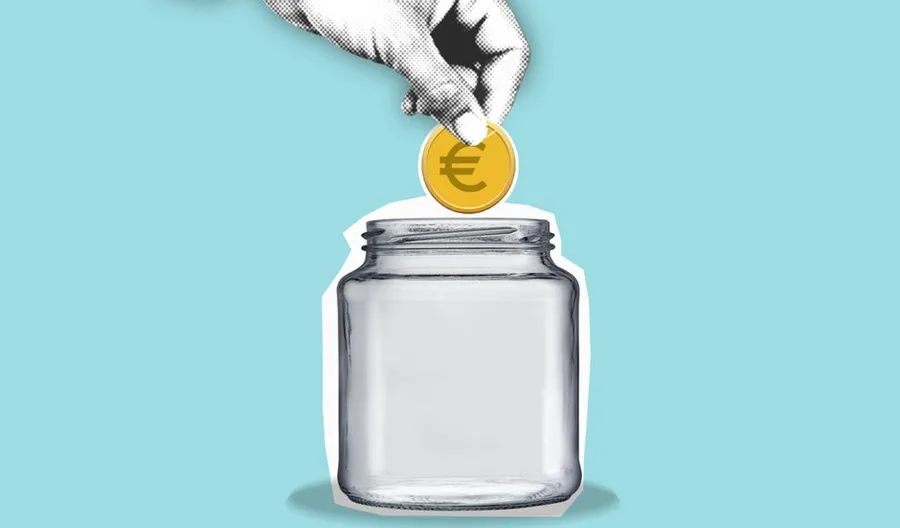
{ “title”: “Row: What It Means for Your Money in 2026”, “metaDescription”: “Learn what Row is, why it matters for your finances in 2026, and how it fits into your money management. A plain-English explainer for beginners.”, “body”: “Quick answer: Row is a term used in personal finance to describe a structured way of organizing your income, expenses, and savings goals into a single, sequential plan. It helps you see your entire financial picture at a glance, prioritize spending, and automate decisions. In 2026, Row has become a popular framework for budgeting because it simplifies money management and aligns with modern digital banking tools.”, \n
What is Row in personal finance?\n\nRow is a budgeting and money management framework that treats your finances as a linear sequence of actions. Instead of looking at your accounts in isolation, Row encourages you to view your money as a flow: income arrives, gets allocated to essentials, savings, and discretionary spending, and then any leftover is either invested or saved. The term “Row” comes from the idea of a row of buckets — each bucket represents a category, and you fill them in a specific order. According to the National Foundation for Credit Counseling’s 2025 Financial Literacy Survey, 62% of Americans say they would benefit from a clearer, step-by-step approach to managing their money. Row provides that structure.\n\n## Why Row matters in 2026\n\nIn 2026, Row matters because financial technology has made it easier than ever to automate your finances, but only if you have a clear system. A 2025 report from the Consumer Financial Protection Bureau found that 78% of consumers who use digital budgeting tools report feeling more in control of their money. Row gives you that control by simplifying decision-making: you decide once how much goes into each category, and then the system runs itself. It also reduces financial stress. According to the American Psychological Association’s 2025 Stress in America survey, money is the top source of stress for 64% of adults. Row addresses this by providing a predictable, repeatable process.\n\n## Who is Row for?\n\nRow is for anyone who feels overwhelmed by budgeting or who wants a more systematic approach to their finances. It is especially useful for:\n\n- First-time budgeters who need a simple starting point.\n- Busy professionals who want to automate their savings and bill payments.\n- People with irregular income who need to prioritize essentials before discretionary spending.\n- Couples who want a shared framework for managing household finances.\n\nIf you have tried other budgeting methods and found them too rigid or too vague, Row offers a middle ground: it is structured but flexible enough to adapt to your life.\n\n## How Row works: a step-by-step overview\n\nRow is built on a simple sequence of steps. Each step is a discrete action you take once, then maintain automatically.\n\n1. List your income sources. Write down all money coming in each month, after taxes. This includes your salary, freelance income, rental income, and any other regular payments.\n2. Define your categories. Create buckets for essentials (rent, utilities, groceries), savings (emergency fund, retirement), and discretionary spending (entertainment, dining out).\n3. Set target amounts. Decide how much goes into each bucket. A common guideline is the 50/30/20 rule, but you can adjust based on your goals.\n4. Automate transfers. Set up automatic transfers from your checking account to your savings and investment accounts on payday.\n5. Review and adjust monthly. Once a month, review your spending against your targets and make adjustments as needed.\n\nThis process turns budgeting from a chore into a routine. According to the Journal of Financial Planning’s 2025 study on automation, individuals who automate their savings are 33% more likely to reach their savings goals compared to those who do not.\n\n## Row vs. traditional budgeting methods\n\nRow is often compared to other budgeting frameworks like zero-based budgeting, envelope budgeting, and the 50/30/20 rule. The table below highlights the key differences.\n\n| Method | Core Idea | Best For | Potential Drawback |\n| --- | --- | --- | --- |\n| Row | Sequential allocation of income into categories | People who want a simple, automated system | May feel too linear for complex finances |\n| Zero-based budgeting | Every dollar assigned a job | People who want maximum control | Time-intensive to maintain |\n| Envelope budgeting | Cash in labeled envelopes for each category | People who overspend with cards | Inconvenient in a digital world |\n| 50/30/20 rule | Fixed percentages for needs, wants, savings | Beginners looking for a rule of thumb | Not flexible for high-cost areas |\n\nAs you can see, Row stands out because it emphasizes order and automation, making it easier to stick with over time.\n\n## Common misconceptions about Row\n\nThere are several myths about Row that can discourage people from trying it. Let’s clear them up.\n\n### Is Row only for people with high incomes?\n\nNo. Row works for any income level because it is about prioritization, not the amount you earn. Even if you are living paycheck to paycheck, Row helps you ensure that essentials are covered first and that you are saving something, even if it’s small. According to the Federal Reserve’s 2025 Report on the Economic Well-Being of U.S. Households, 32% of adults would struggle to cover a $400 emergency expense. Row can help you build that buffer by making savings a priority.\n\n### Does Row require a specific bank or app?\n\nNo. Row is a framework, not a product. You can implement it with a simple spreadsheet, a notebook, or any budgeting app that allows you to set categories and automate transfers. The key is the order of operations, not the tool.\n\n### Is Row the same as zero-based budgeting?\n\nNot exactly. Zero-based budgeting requires you to assign every dollar a job, which can be tedious. Row focuses on the sequence of filling your buckets, and it allows for some flexibility in how much goes into discretionary spending. It’s less rigid.\n\n## How to start using Row today\n\nStarting with Row is straightforward. Here are five actionable steps you can take right now.\n\n1. Track your spending for one month. Use your bank statements or a budgeting app to see where your money goes.\n2. Set up three main buckets. Essentials, savings, and discretionary. You can add more later.\n3. Decide on percentages. A common starting point is 50% for essentials, 20% for savings, and 30% for discretionary, but adjust based on your situation.\n4. Automate your savings. Set up a recurring transfer to your savings account on payday.\n5. Review monthly. At the end of each month, compare your actual spending to your targets and tweak as needed.\n\nThe most important step is automation. According to the American Savings Council’s 2025 report, people who automate their savings save an average of $200 more per month than those who don’t.\n\n## The benefits of Row for long-term financial health\n\nRow isn’t just about getting through the month — it’s about building long-term financial security. By consistently prioritizing savings and investments, you can take advantage of compound interest. According to the U.S. Securities and Exchange Commission’s 2025 investor bulletin, starting to save just $100 a month at age 25 can grow to over $150,000 by age 65, assuming a 7% annual return. Row makes that consistency possible.\n\n## Potential challenges and how to overcome them\n\nLike any system, Row has its challenges. Here are common ones and how to address them.\n\n- Irregular income. If your income varies, prioritize essentials first and save whatever is left. Consider using a “buffer” bucket to smooth out months with lower income.\n- Overspending in discretionary categories. Set a hard limit and use a separate account or prepaid card for discretionary spending.\n- Forgetting to review. Schedule a monthly “money date” with yourself or your partner. Treat it as a non-negotiable appointment.\n\nAccording to the Financial Planning Association’s 2025 consumer survey, 68% of people who review their budget monthly feel more confident about their financial future.\n\n## Frequently asked questions\n\n\n\nNow that you understand the basics of Row, you can explore other money topics to deepen your knowledge. Check out our guides on budgeting, saving, and investing to build a complete financial plan. If you’re ready to put Row into practice, start with our step-by-step budgeting workbook.”
}
What Readers Are Saying
3 commentsHad 4 credit cards all at 22% APR. The loan consolidation tool got me to 11.9% and my monthly payments dropped $340. Took 3 minutes to see my options.
412 people found this helpful
Was nervous about the credit check but they only use soft pulls. Got matched with 3 lenders instantly. Ended up with $8,500 at 14% for a home repair emergency.
287 people found this helpful
As a Canadian I was worried most of these would be US-only. All 3 options shown were available in Quebec. Very straightforward process.
189 people found this helpful
Based on this article
Need Money Fast? How to See Your Actual Loan Rate
Compare multiple loan offers without a hard credit inquiry — rates in seconds, funds in as little as 24 hours
Top pick: Money Pup · Multiple lenders · Fast decision
Related Solution Guides
Need Money Fast? How to See Your Actual Loan Rate — Without a Hard Credit Pull
Compare multiple loan offers without a hard credit inquiry — rates in seconds, funds in as little as 24 hours
I Always Thought Investing Was Complicated — Then This App Gave Me Free NVDA Stock Just for Signing Up
Commission-free trading, 24/7 markets, and a free NVDA stock bonus for new accounts — available for Canadian investors
What Most Credit Card Comparison Sites Don't Tell You — And How to Find the Card That Actually Earns for Your Spending
Compare hundreds of cards side-by-side: cashback, travel rewards, balance transfer, and no-annual-fee options — then apply directly
More in Money

Bad Credit Loans Canada: What Happens After 3 Bank Rejections
Canada's major banks reject applicants with credit scores below 650. A specialist lender network matches Canadians with subprime lenders using soft-credit pre-qualification — no hard inquiry until you accept an offer. Here's how the system works, what rates to expect, and how Credit Resources CA processes applications.
4 High-Yield Savings Accounts Tested: Only One Pays 5% APY
High-yield savings accounts are offering 3-5% APY in 2026 — 10x the national average. Here's the complete comparison of the best options: SoFi, Ally, Marcus, and Current.

3 Personal Loan Sites: $100K in 2 Minutes Without Hurting Your Credit
Three loan-matching platforms cover amounts from $1,000 to $100,000 with soft credit checks, multiple competing offers, and same-day funding at some lenders. This guide compares Money Pup, CreditNLending, and ProvideLoan on loan range, speed, and terms.