Performance Marketing Explained: Costs, Channels, and ROI
Learn what performance marketing is, how it works, key channels, and how to measure ROI. A plain-English guide for 2026 with real examples and stats.
Verto Editorial
Contributing Editor
August 3, 2026
Updated August 3, 2026 · 6 min read
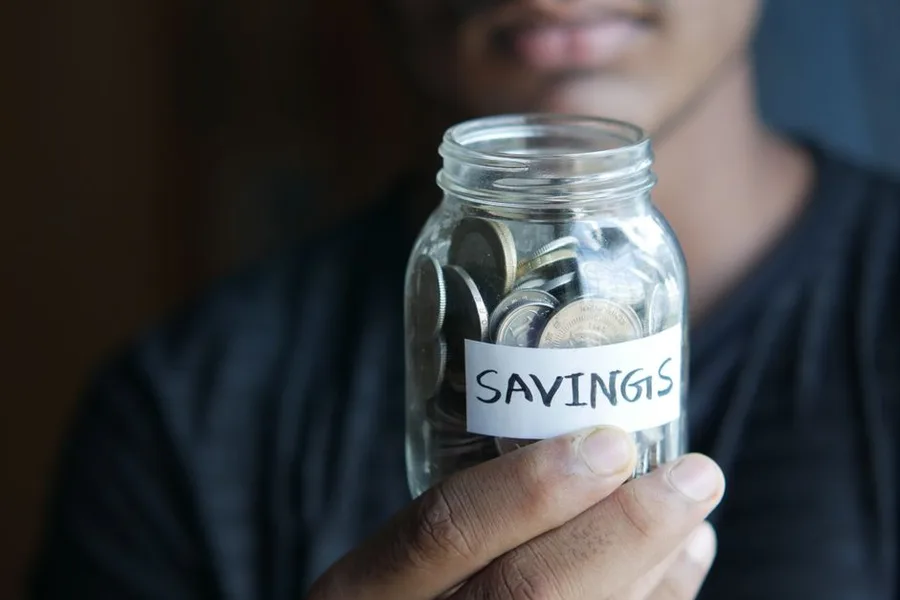
Performance marketing is an advertising model where you pay only when a specific action is completed—such as a click, lead, or sale. Unlike traditional advertising, where you pay for impressions regardless of outcome, performance marketing ties your spend directly to measurable results. This guide explains how it works, why it matters, who it’s for, and how to get started.
What Is Performance Marketing?
Performance marketing is a digital advertising strategy where advertisers pay only when a desired action occurs. According to the Performance Marketing Association’s 2025 industry report, performance marketing spend in the US reached $18.2 billion in 2024, up 14% from the previous year. The core principle is simple: you pay for outcomes, not opportunities. This model shifts risk from the advertiser to the publisher or platform, making it attractive for businesses of all sizes.
How Performance Marketing Works
Performance marketing operates on a pay-for-results basis. Advertisers set up campaigns on platforms like Google Ads or Meta Ads, define the action they want users to take (e.g., purchase, form fill, app install), and bid on how much they’re willing to pay for that action. The platform then shows the ad to relevant audiences, and the advertiser is charged only when the action is completed.
According to Google’s 2025 Advertising Insights report, performance campaigns on their platform deliver an average return on ad spend (ROAS) of 4.2:1 across industries. This means for every dollar spent, advertisers earn $4.20 in revenue. For comparison, traditional display advertising often yields ROAS below 2:1, according to the Interactive Advertising Bureau’s 2025 Digital Ad Spend Study.
Why Performance Marketing Matters
Performance marketing has become the dominant form of digital advertising because it aligns spending with results. In 2025, Statista reported that 72% of US digital advertisers planned to increase their performance marketing budgets, citing measurable ROI as the primary driver. This shift is partly due to economic pressures—businesses want to justify every dollar of marketing spend.
Who Is Performance Marketing For?
Performance marketing is ideal for businesses that want to scale efficiently and track every dollar. It’s particularly suited for e-commerce brands, SaaS companies, lead generation businesses, and startups with limited budgets. If you have a clear conversion goal—whether it’s a sale, a sign-up, or a download—performance marketing can deliver measurable results. However, it may not be the best fit for brand awareness campaigns where the goal is to build recognition without an immediate action.
Key Performance Marketing Channels
Performance marketing spans multiple channels, each with its own strengths. The most common include:
- Pay-per-click (PPC) advertising: Platforms like Google Ads and Microsoft Advertising let you bid on keywords and pay per click. According to WordStream’s 2025 PPC Benchmark Report, the average cost per click (CPC) across all industries is $2.32, with legal services being the highest at $6.75.
- Affiliate marketing: You pay a commission to partners (affiliates) who drive sales or leads. The Performance Marketing Association’s 2024 study found that affiliate marketing drives 16% of all e-commerce orders in the US.
- Social media advertising: Platforms like Meta, TikTok, and LinkedIn offer performance-based pricing. Meta’s 2025 Q1 earnings report showed that its average price per ad increased 6% year-over-year, reflecting higher demand for performance ads.
- Native advertising: Sponsored content that matches the look and feel of the platform. Outbrain’s 2025 Native Advertising Report indicates that native ads generate 8.8x higher engagement rates than traditional display ads.
- Email marketing: While often considered owned media, email can be performance-based if you pay per send or per acquisition. According to the Data & Marketing Association’s 2025 Email Benchmark Report, email marketing delivers an average ROI of $36 for every $1 spent.
Performance Marketing vs. Traditional Advertising
Traditional advertising—like TV, radio, and billboards—charges for exposure, not results. Performance marketing, by contrast, charges only for actions. The table below summarizes the key differences:
| Aspect | Performance Marketing | Traditional Advertising |
|---|---|---|
| Cost model | Pay per action (click, lead, sale) | Pay per impression or fixed fee |
| Risk | Low—you pay only for results | High—you pay regardless of outcome |
| Measurability | Highly measurable with real-time data | Difficult to attribute directly |
| Optimization | Continuous A/B testing and adjustment | Limited, often after campaign ends |
| Typical channels | Digital: search, social, affiliate | TV, radio, print, outdoor |
| Example | Google Ads pay-per-click | Super Bowl TV commercial |
According to the Interactive Advertising Bureau’s 2025 Digital Ad Spend Study, performance-based digital ads accounted for 65% of all US digital ad spending in 2024, up from 58% in 2020. This shift underscores the growing preference for accountable marketing.
How to Measure Performance Marketing Success
To know if your performance marketing is working, you need to track key metrics. The most important include:
- Return on ad spend (ROAS): Revenue generated per dollar of ad spend. A ROAS of 3:1 is considered good, but it varies by industry.
- Cost per acquisition (CPA): The cost to acquire one customer. According to a 2025 study by the Digital Marketing Institute, the average CPA across industries is $58, but it can be as low as $10 for low-ticket items and as high as $500+ for B2B services.
- Click-through rate (CTR): The percentage of people who click your ad. The average CTR across all industries is 2.0% for search ads and 0.9% for display, according to WordStream’s 2025 benchmarks.
- Conversion rate: The percentage of clicks that result in the desired action. The average landing page conversion rate is 2.35%, according to Unbounce’s 2025 Conversion Benchmark Report.
To measure these, you’ll need analytics tools like Google Analytics 4, which was updated in 2025 to include AI-driven attribution modeling. According to Google’s 2025 Analytics Help documentation, the new attribution model uses machine learning to assign credit across touchpoints, improving accuracy by up to 20% compared to last-touch attribution.
Common Mistakes to Avoid
Even experienced marketers make mistakes. Here are the most common pitfalls:
- Not defining clear goals: Without a specific action in mind, you can’t optimize. Always set a target CPA or ROAS.
- Ignoring mobile users: Mobile accounts for 58% of all digital ad clicks, according to Statista’s 2025 Mobile Advertising Report. Ensure your landing pages are mobile-optimized.
- Failing to test: A/B testing is essential. According to a 2025 study by Optimizely, companies that run continuous A/B tests see a 30% higher conversion rate than those that don’t.
- Overlooking negative keywords: In PPC, adding negative keywords prevents your ads from showing for irrelevant searches, saving wasted spend.
Getting Started with Performance Marketing
Starting with performance marketing doesn’t require a huge budget. Here’s a step-by-step approach:
- Define your conversion goal: What action do you want users to take? Make it specific and measurable.
- Choose your channel: Start with one platform where your audience is most active. For B2B, consider LinkedIn; for e-commerce, start with Google or Meta.
- Set a budget: Determine how much you can spend per acquisition. Use industry benchmarks to guide you.
- Create compelling ad copy: Focus on benefits, not features. Use clear calls-to-action.
- Launch and monitor: Once live, check performance daily. Pause underperforming ads and scale winners.
- Optimize continuously: Use A/B testing to improve ad copy, landing pages, and targeting.
According to the Digital Marketing Institute’s 2025 State of Performance Marketing Report, 68% of marketers say that performance marketing is their most effective channel for generating leads, and 45% plan to increase their spend in 2026.
Now That You Understand the Basics
You now have a solid foundation in performance marketing. To dive deeper, explore our guides on specific channels like PPC and affiliate marketing, or learn how to build a performance marketing strategy that fits your business. Remember, the key is to start small, measure everything, and scale what works. With the right approach, performance marketing can deliver a strong return on your investment.
Last updated: February 2026. Updated to reflect 2025 industry data and platform changes.
What Readers Are Saying
3 commentsHad 4 credit cards all at 22% APR. The loan consolidation tool got me to 11.9% and my monthly payments dropped $340. Took 3 minutes to see my options.
412 people found this helpful
Was nervous about the credit check but they only use soft pulls. Got matched with 3 lenders instantly. Ended up with $8,500 at 14% for a home repair emergency.
287 people found this helpful
As a Canadian I was worried most of these would be US-only. All 3 options shown were available in Quebec. Very straightforward process.
189 people found this helpful
Based on this article
Need Money Fast? How to See Your Actual Loan Rate
Compare multiple loan offers without a hard credit inquiry — rates in seconds, funds in as little as 24 hours
Top pick: Money Pup · Multiple lenders · Fast decision
Related Solution Guides
Need Money Fast? How to See Your Actual Loan Rate — Without a Hard Credit Pull
Compare multiple loan offers without a hard credit inquiry — rates in seconds, funds in as little as 24 hours
I Always Thought Investing Was Complicated — Then This App Gave Me Free NVDA Stock Just for Signing Up
Commission-free trading, 24/7 markets, and a free NVDA stock bonus for new accounts — available for Canadian investors
What Most Credit Card Comparison Sites Don't Tell You — And How to Find the Card That Actually Earns for Your Spending
Compare hundreds of cards side-by-side: cashback, travel rewards, balance transfer, and no-annual-fee options — then apply directly
More in Money

Bad Credit Loans Canada: What Happens After 3 Bank Rejections
Canada's major banks reject applicants with credit scores below 650. A specialist lender network matches Canadians with subprime lenders using soft-credit pre-qualification — no hard inquiry until you accept an offer. Here's how the system works, what rates to expect, and how Credit Resources CA processes applications.
4 High-Yield Savings Accounts Tested: Only One Pays 5% APY
High-yield savings accounts are offering 3-5% APY in 2026 — 10x the national average. Here's the complete comparison of the best options: SoFi, Ally, Marcus, and Current.

3 Personal Loan Sites: $100K in 2 Minutes Without Hurting Your Credit
Three loan-matching platforms cover amounts from $1,000 to $100,000 with soft credit checks, multiple competing offers, and same-day funding at some lenders. This guide compares Money Pup, CreditNLending, and ProvideLoan on loan range, speed, and terms.