Hilo Review: Cuff-free, continuous blood pressure tracking throughout the day
Cuff-free, continuous blood pressure tracking throughout the day — an honest look at how it works and who it fits.
Alex Kovacs
Security & Technology Editor
July 31, 2026
Updated July 31, 2026 · 6 min read
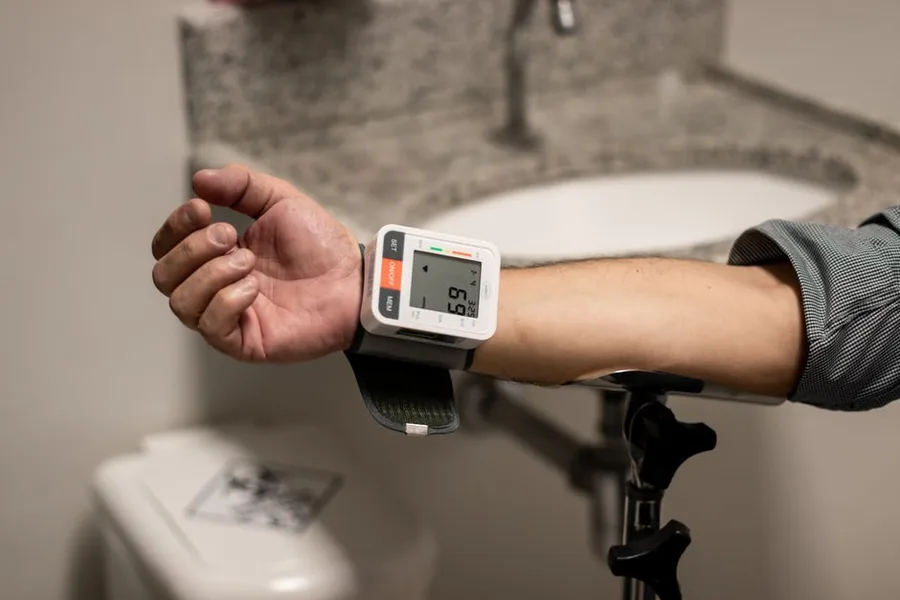
Hilo offers a non-invasive, continuous blood pressure monitoring solution that lets you track your readings throughout the day without the discomfort of traditional arm cuffs. For people who need frequent BP data—such as those managing hypertension, monitoring medication effects, or simply wanting deeper health insights—Hilo replaces sporadic spot-checks with an ongoing stream of information. This review examines how the technology works, who it fits best, and the practical considerations before you commit.
What is Hilo and how does continuous blood pressure monitoring work?
Hilo provides users with a non-invasive, continuous blood pressure monitoring solution. Unlike a standard home blood pressure monitor that takes a single reading when you inflate the cuff, Hilo’s approach is designed to track your blood pressure levels throughout the day, without the need for uncomfortable cuffs. The core premise is that blood pressure is not a static number—it fluctuates constantly in response to activity, stress, meals, and sleep. A cuff-based device gives you a snapshot; a continuous system aims to give you the full picture.
The practical benefit of this approach is pattern recognition. A single high reading at the doctor’s office—often called “white coat hypertension”—may not reflect your typical levels. Conversely, a normal reading at a checkup might miss dangerous spikes that occur during daily stress or physical exertion. By capturing data continuously, Hilo aims to surface trends that intermittent measurement simply misses. For anyone whose doctor has asked for more data points between visits, this type of device addresses a real gap in traditional home monitoring.
Who is the Hilo blood pressure monitor designed for?
Hilo is designed for adults who need or want more frequent blood pressure data than a traditional cuff provides. This includes people recently diagnosed with hypertension who are establishing a baseline, individuals adjusting to new blood pressure medications who need to track effectiveness, and those with conditions like anxiety or sleep issues that can cause BP fluctuations. It also appeals to health-optimizers who want to understand how their lifestyle choices—caffeine, exercise, stress—impact their cardiovascular system in real time.
If you fall into a category where your doctor has asked you to “keep an eye on” your blood pressure between appointments, a continuous monitor offers a more complete dataset than a logbook of two or three daily readings. However, if you only need a single, accurate reading once a week, a traditional cuff is simpler, cheaper, and requires no charging. Hilo is a commitment to data collection, not a replacement for a standard monitor in every scenario.
How does Hilo compare to traditional blood pressure cuffs?
The fundamental difference between Hilo and a standard cuff is the measurement philosophy: continuous tracking versus periodic sampling. To help you evaluate the trade-offs, the table below breaks down the key distinctions.
| Feature | Hilo Continuous Monitor | Traditional Arm Cuff |
|---|---|---|
| Measurement Frequency | Continuous throughout the day | Single reading per use |
| Comfort | Non-invasive, no cuff inflation | Cuff inflation can be uncomfortable |
| Data Volume | High—dozens or hundreds of data points daily | Low—typically 2-3 readings per day |
| User Action Required | Wear device; minimal interaction | Must stop, position arm, and inflate cuff |
| Best For | Trend analysis, pattern detection, medication tracking | Spot checks, occasional verification |
| Portability | Wearable design | Bulky unit with cuff and tubing |
| Learning Curve | Requires understanding of trend data | Simple, familiar process |
This comparison highlights that Hilo is not necessarily “better” than a cuff—it is different. A cuff gives you a definitive number at a specific moment, which is useful for clinical decisions. Hilo gives you a river of data that reveals patterns. For example, if your blood pressure spikes every morning at 8 AM, a cuff might catch it only if you happen to measure at that time. Hilo would capture that spike consistently, providing actionable information about your circadian rhythm and its impact on your cardiovascular health.
What are the main benefits of cuff-free blood pressure tracking?
The primary benefit of cuff-free tracking is the removal of the “measurement effect”—the tendency for the act of measuring to alter the result. When you strap on a cuff, you often sit still, take a breath, and focus on the reading. That state is not your normal state. Hilo’s non-invasive, continuous approach captures blood pressure during your actual daily life: while you are working, walking, eating, or even sleeping. This passive data collection provides a more realistic picture of your cardiovascular load.
A second benefit is compliance. Many people abandon cuff-based monitoring because it is disruptive. Stopping what you are doing, positioning the cuff, and waiting for a reading is a chore. Because Hilo requires no conscious effort to take a reading, users are more likely to wear it consistently, leading to a more complete dataset. For a physician trying to adjust a medication dosage, a week of continuous data is far more useful than a logbook with a few scattered entries. The trend data reveals whether a medication is working throughout the day or only at certain times.
What are the limitations and considerations before buying Hilo?
The most significant limitation of any new health technology is that it is not a replacement for clinical-grade equipment. A continuous monitor like Hilo provides trend data, but if you have a serious cardiovascular condition, you should rely on your doctor’s guidance and validated cuff measurements for treatment decisions. The device is a tool for insight, not a diagnostic instrument.
Battery life and wearability are practical considerations. A continuous monitor requires power to run sensors and transmit data, so you will need to charge it regularly. You also need to be comfortable wearing the device for extended periods. Finally, consider the data management aspect: continuous monitoring generates a large volume of information. You need to be willing to review that data, share it with your doctor, or use the associated app to make sense of it. If you are not interested in tracking trends and just want a simple number, the complexity of continuous data may be overwhelming.
How should you use Hilo for the best results?
To get the most value from Hilo, establish a routine. Wear the device consistently for a defined period—such as two weeks—to establish a baseline. During that time, keep a simple log of your activities, stress levels, and meals. When you review the data, look for patterns: Do your readings spike after coffee? Do they drop after exercise? Do they rise in the evening? These correlations are the real value of continuous monitoring.
When you share data with your healthcare provider, bring a summary of the trends, not just raw numbers. Ask your doctor what patterns are most relevant to your condition. For example, a doctor might want to see your nighttime blood pressure readings, which are notoriously difficult to capture with a cuff. Hilo’s continuous nature makes this possible. The goal is to transform raw data into actionable insights that improve your health decisions.
What does the Hilo review conclude: Is it worth it?
Hilo provides a non-invasive, continuous blood pressure monitoring solution that fills a specific niche in home health tracking. If your need is for trend data—understanding how your blood pressure changes throughout the day, identifying triggers, or monitoring medication effectiveness—Hilo offers a compelling alternative to the discomfort and infrequency of cuff-based monitoring. The technology is designed for users who want a deeper understanding of their cardiovascular health, not just occasional spot-checks.
For the right user, Hilo is worth it. If you are managing hypertension, are curious about your body’s responses, or have a doctor who has asked for more data, the continuous stream of information is genuinely valuable. However, if you are looking for a simple, occasional blood pressure reading, a traditional cuff is more practical and cost-effective. Hilo is an investment in data, and its value is directly proportional to how much you use that data to inform your health decisions.
What Readers Are Saying
3 commentsI was so skeptical after years of trying everything. But 3 months in and I've lost 22 lbs. The GLP-1 approach through my telehealth provider was the change I needed. Wish I'd found this a year ago.
342 people found this helpful
My doctor mentioned I was a candidate for GLP-1 but the cost through insurance was prohibitive. Found a telehealth option for under $200/month which is a game-changer.
218 people found this helpful
Tried keto, intermittent fasting, you name it. The biological approach finally made things click. Down 18 lbs in 8 weeks and my energy is back.
156 people found this helpful
Based on this article
Why Diets Keep Failing You
Compounded Tirzepatide and Semaglutide deliver the same active ingredients as Ozempic and Mounjaro — through telehealth platforms for a fraction of the brand-name cost
Top pick: Gala · Starting at $179/mo — lowest price in the US
Frequently Asked Questions
What is the Hilo blood pressure monitor and how does it track blood pressure?
Hilo is a non-invasive device that monitors blood pressure continuously throughout the day without using a traditional arm cuff. It captures ongoing readings to reveal patterns and fluctuations that single spot-checks miss, giving a fuller picture of your cardiovascular health.
Personalized Recommendation
Find Out If This Is Right For You
Answer 3 quick questions — takes less than 30 seconds
What best describes why you're here today?
Based on your answers
See your options appears to be a strong match
Takes under 60 seconds — no obligation to proceed.
See your options →Verto may earn a commission — it never changes our verdict. No obligation to purchase.
Today's Top Pick
See your options
Available now — see if it's right for your situation.
See your optionsVerto may earn a commission — it never changes our verdict. Checking availability doesn't commit you to anything.
Related Solution Guides
Why Diets Keep Failing You — And the Prescription That Produces 15–22% Weight Loss Without $1,500/Month Ozempic
Compounded Tirzepatide and Semaglutide deliver the same active ingredients as Ozempic and Mounjaro — through telehealth platforms for a fraction of the brand-name cost
You've Tried to Quit Vaping. Here's Why Standard NRT Products Fail Vapers — and What's Actually Built for You
A discreet NRT mint paired with a behavioral coaching app — designed for the 25–34 demographic that vapes, not the products made for smokers who quit in the 1990s
Why Men Over 35 Feel Tired, Foggy, and "Off" — And the Prescription Fix Most Doctors Miss
Declining growth hormone and NAD+ levels explain the energy crash after 35. Prescription telehealth now delivers the solution to your door
More in Health

JSHealth Review: Vitamins and supplements for everyday health and wellness
Vitamins and supplements for everyday health and wellness — an honest look at how it works and who it fits.

AkinKanna Review: Needle-free peptide capsules for focus, recovery, and stress resilience
Needle-free peptide capsules for focus, recovery, and stress resilience — an honest look at how it works and who it fits.

Berberine Patches Review: Transdermal, needle-free patches for appetite and craving support
Transdermal, needle-free patches for appetite and craving support — an honest look at how it works and who it fits.