Advertising Disclosure: This page contains affiliate links. Verto may earn a commission if you purchase through them, at no extra cost to you. Learn more
Why Your Workouts Stop Working After 40 — The Physiology, and What Actually Does Work
Women lose 3–8% of muscle mass per decade after 30, with accelerated loss after menopause due to estrogen decline. The workouts that built fitness in your 30s are physiologically less effective in your 40s. Here's the science of post-40 body composition and what Reverse Health's program adapts for it.
Elena Park
Health & Wellness Editor
June 11, 2026
Updated June 11, 2026 · 8 min read
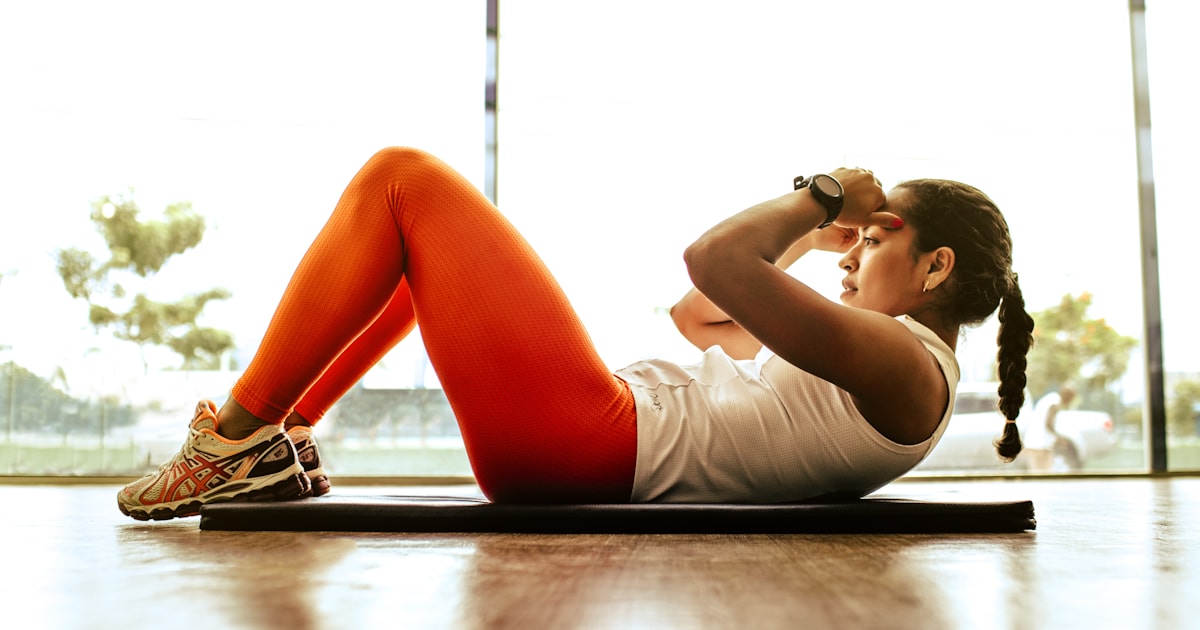
Bottom line: Women lose 3–8% of muscle mass per decade after 30, with loss accelerating after menopause. The workouts that produced results in your 30s are physiologically less effective at 45 because the hormonal environment supporting muscle adaptation has changed. This is biology, not effort. Progressive resistance training, adequate protein (1.6–2.2g/kg/day), and recovery optimization are what the evidence supports — and what Reverse Health builds its 28-day program around.
The Physiology Nobody Explains at 42
Most women who hit a fitness plateau in their 40s assume they’re not working hard enough. They add more cardio. Results stay flat or reverse. They work harder. Same outcome.
The problem isn’t effort. It’s that the exercise prescription that built fitness in your 30s is no longer physiologically optimal for your body in your 40s — and no one explained why.
Here’s what changed:
Sarcopenia is accelerating. Sarcopenia — the age-related loss of muscle mass — begins in your 30s at approximately 3–5% per decade. After menopause, the rate increases to 1–2% per year. This isn’t visible as muscle shrinkage; it’s usually masked by fat gain that replaces lost muscle. Body weight stays the same while body composition shifts: less muscle, more fat. Standard scales don’t show this.
Estrogen was your anabolic environment. Estrogen isn’t just a reproductive hormone — it directly stimulates muscle protein synthesis, supports satellite cell (muscle stem cell) activation, and modulates inflammation response after exercise. When estrogen declines, the training stimulus that previously produced adaptation now produces slower, weaker adaptation.
Recovery is longer. Post-exercise muscle protein synthesis persists for 24–48 hours in younger women; this window is shorter in perimenopausal and postmenopausal women. Combined with lower-quality sleep (disrupted by hormonal changes), the total repair time increases.
Why do women’s workouts stop working after 40?
Women lose 3–8% of muscle per decade through sarcopenia, with loss accelerating after menopause due to estrogen decline. Estrogen directly stimulates muscle protein synthesis — its decline means the same training volume produces less adaptation. Additionally, exercise-induced fat loss becomes less efficient as visceral fat accumulation shifts (driven by declining estrogen) to the abdominal area, which is less responsive to cardio-focused approaches.
Why Cardio Alone Doesn’t Work Anymore
In your 30s, adding two or three extra cardio sessions per week might have produced visible results within 4–6 weeks.
In your 40s, adding cardio typically produces one or more of the following outcomes: increased hunger (offsetting the caloric deficit), increased cortisol (which promotes fat retention, particularly abdominal), and reduced recovery capacity for the resistance training that would actually preserve muscle.
This doesn’t mean cardio is useless — cardiovascular health, insulin sensitivity, and mood benefits from aerobic exercise are real and important. But for body composition goals (leaner, stronger, better-functioning physique) in women over 40, cardio is a supporting player, not the primary driver.
The evidence: A 2022 meta-analysis in the British Journal of Sports Medicine compared resistance training, cardio, and combined training in perimenopausal women. Resistance training produced the largest improvements in body composition, functional strength, and resting metabolic rate. The combination group performed well, but the resistance training component was the primary driver.
What Actually Changes the Equation
1. Progressive resistance training, 2–3x per week. Not light resistance, not “toning.” Loading heavy enough to approach muscular fatigue in 8–12 rep ranges stimulates the protein synthesis response. The “don’t bulk up” fear prevents many women from lifting with adequate stimulus — the hormonal environment post-40 makes significant muscle hypertrophy difficult without deliberate effort; lifting heavy produces the training effect without the physique concern.
2. Protein at 1.6–2.2g per kg of bodyweight. Standard dietary protein recommendations (0.8g/kg) are set for nitrogen balance, not muscle preservation in the context of age-related loss. Research on older adults consistently shows 1.6–2.2g/kg supports muscle mass retention under the metabolic conditions of perimenopause.
3. Recovery prioritisation. Sleep quality directly determines muscle protein synthesis rates. The deep sleep disruption caused by perimenopausal night sweats and hormonal fluctuations compounds sarcopenia by reducing the repair window. Addressing sleep — through HRT if appropriate, or behavioural interventions — is not separate from fitness; it’s part of the system.
4. Removing the cardio ceiling. Not eliminating cardio — reducing it to 2–3 moderate sessions per week and investing the remaining training time in resistance work. The metabolic benefits of cardio are achieved with 150 minutes/week of moderate activity; beyond that, the law of diminishing returns applies quickly for body composition goals in this age group.
Reverse Health: What the Program Structures Differently
Reverse Health’s 28-day program is built around these physiological realities. The program structures training sessions around progressive resistance with appropriate loading cues, nutrition guidance around 1.6–1.8g/kg protein targets, and includes recovery protocols (sleep hygiene, stress management) as part of the intervention rather than optional additions.
The format is phone-app based, with guidance through daily sessions. Women completing the initial 28 days typically report visible body composition changes and improved energy — because the program addresses the actual mechanism rather than applying a generic fitness formula.
[For the hormonal component of the fitness equation, our perimenopause guide explains how hormonal changes drive the physiology described here.] [The Winona HRT review covers how bioidentical hormone therapy changes the recovery environment for exercise.]
Start the 28-Day Program → Reverse Health — Designed for Women 40+
This article contains affiliate links. Verto earns a commission if you start a Reverse Health program through our link. Individual results vary. Information in this article is for educational purposes and is not a substitute for professional medical or fitness advice.
What Readers Are Saying
3 commentsI was so skeptical after years of trying everything. But 3 months in and I've lost 22 lbs. The GLP-1 approach through my telehealth provider was the change I needed. Wish I'd found this a year ago.
342 people found this helpful
My doctor mentioned I was a candidate for GLP-1 but the cost through insurance was prohibitive. Found a telehealth option for under $200/month which is a game-changer.
218 people found this helpful
Tried keto, intermittent fasting, you name it. The biological approach finally made things click. Down 18 lbs in 8 weeks and my energy is back.
156 people found this helpful
Based on this article
Why Diets Keep Failing You
Compounded Tirzepatide and Semaglutide deliver the same active ingredients as Ozempic and Mounjaro — through telehealth platforms for a fraction of the brand-name cost
Top pick: Gala · Starting at $179/mo — lowest price in the US
Frequently Asked Questions
Why do workouts stop being effective for women over 40?
Three physiological changes converge after 40: declining estrogen reduces muscle protein synthesis and increases recovery time, declining progesterone disrupts sleep quality (which is when most muscle repair happens), and the natural sarcopenic process (age-related muscle loss of 3–8%/decade) accelerates. The same training volume that built muscle at 35 produces less stimulus at 45 because the hormonal environment supporting adaptation has changed.
What type of exercise is most effective for women over 40?
Progressive resistance training is the most evidence-backed intervention for post-40 women. A 2022 meta-analysis in the British Journal of Sports Medicine found resistance training 2–3 times per week produced significant muscle mass preservation and metabolic improvement in perimenopausal women. Cardio remains important for cardiovascular health but is less effective for body composition goals in this age group than resistance training.
How does estrogen decline affect exercise and body composition?
Estrogen has direct anabolic (muscle-building) effects — it stimulates muscle protein synthesis and supports satellite cell activation for muscle repair. Estrogen decline in perimenopause reduces these effects, meaning the same training stimulus produces less muscle growth and adaptation. Estrogen also affects fat distribution: declining estrogen shifts fat storage from hips/thighs toward abdominal visceral fat, which is metabolically more active and harder to reduce with standard cardio.
What is Reverse Health and how does it differ from standard fitness apps?
Reverse Health is a 28-day program designed specifically for the hormonal and physiological context of women 40+. Unlike generic fitness apps, it structures training, nutrition, and recovery guidance around perimenopausal physiology: higher protein requirements (1.6–2.2g/kg for muscle preservation), resistance-focused training blocks, and recovery emphasis that accounts for longer post-40 repair times.
How long does it take to see results from strength training after 40?
Neurological adaptations (strength gains without muscle size changes) appear within 2–4 weeks. Measurable muscle mass changes require 8–12 weeks of consistent progressive loading. Body composition improvements — fat reduction alongside muscle gain — are typically visible on measurements at 12 weeks and subjectively noticeable before that. Progress is real but slower than in your 20s–30s due to the reduced anabolic hormonal environment.
Today's Top Pick
Start Reverse Health 28-Day Program — Designed for Women 40+
Available now — see if it's right for your situation.
Start Reverse Health 28-Day Program — Designed for Women 40+Verto may earn a commission — it never changes our verdict. Checking availability doesn't commit you to anything.
Advertising Disclosure: This article contains affiliate links. Verto may receive a commission when you purchase through these links, at no additional cost to you. We only feature offers we believe are genuinely useful. Individual results vary. Consult a qualified professional before starting any health, financial, or legal program.
More in Health & Wellness

21KETO Canada Review 2026: Do Keto BHB Gummies Actually Work — Or Are They Expensive Candy?
8 min read

BEACON40 Review: 90 Days Testing a Functional Fitness Program for People Over 40
7 min read

The 4 Nootropic Supplements Actually Worth Buying in 2026: What Brain Science Says (and What It Doesn't)
9 min read