What Cash Back Credit Cards Don't Tell You Before You Apply
Cash back is the simplest rewards format — but the structures vary enough to matter. Here's how percentage categories, flat-rate cards, rotating categories, and signup bonuses actually work before you apply.
Sofia Reyes
Personal Finance Editor
June 11, 2026
Updated June 11, 2026 · 6 min read
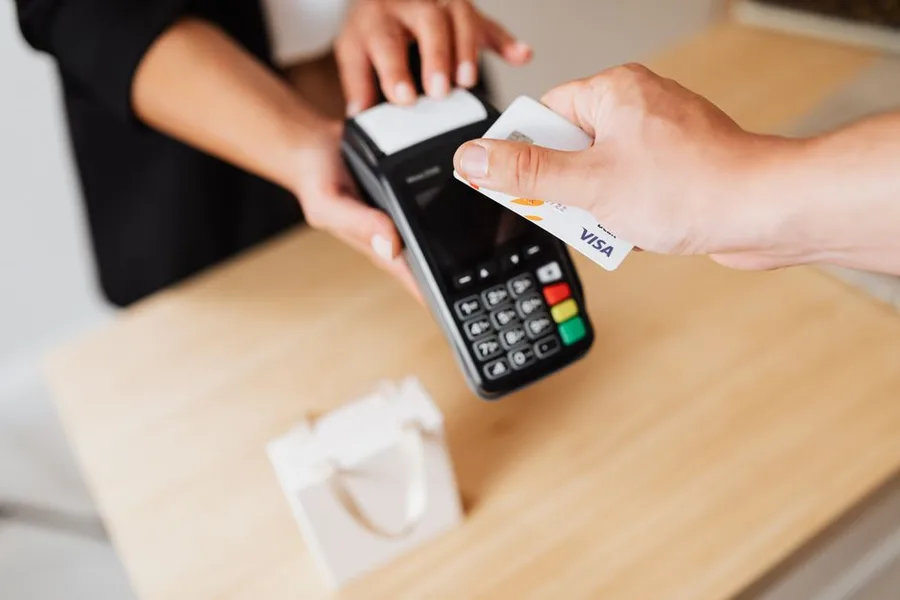
Bottom line: Cash back is the most transparent credit card reward format. A 2% flat-rate card on $2,000/month in spending returns $480/year in pure cash. Category cards beat this for heavy spenders in bonus categories. The math only works in your favor if you pay your balance in full — carrying a balance at 20%+ APR erases years of rewards in weeks.
Quick answer: Cash back credit cards return a percentage of every purchase as actual money — typically 1% to 6% of spending. Unlike points or miles, cash back has no conversion rates, no blackout dates, and no expiration on most cards. The three main structures are flat-rate (same percentage on everything), category-accelerated (higher rates on specific spending types), and rotating categories (5% on quarterly-changing categories). According to the Consumer Financial Protection Bureau’s 2025 report on credit card rewards, the average US household earning $480/year in cash back could earn $800+/year by optimizing their card choice and paying balances in full.
How Cash Back Credit Cards Work: What You’re Actually Earning and What to Watch For
Cash back credit cards are the simplest rewards product in personal finance. There are no points to convert, no airline partner charts to decode, no expiring miles. You spend money, you get a percentage of it back. But the structures vary enough to matter for how much you actually earn. According to the Federal Reserve’s 2025 Survey of Consumer Finances, 68% of US households carry at least one rewards credit card, yet fewer than 30% understand the earning structure of their primary card. This gap between ownership and understanding costs American consumers an estimated $15 billion annually in foregone rewards, based on a 2024 analysis by the Consumer Financial Protection Bureau.
The Three Cash Back Structures
Cash back credit cards operate through three distinct earning mechanisms. Each structure rewards different spending patterns, and the optimal choice depends entirely on your monthly spending distribution. According to a 2025 study by the Financial Health Network, households that match their card structure to their spending patterns earn 40% more in annual cash back than households using a mismatched card.
1. Flat-Rate Cash Back: 2% on Everything
Flat-rate cash back cards return the same percentage on every purchase, regardless of category. This structure eliminates the need to track spending categories or optimize purchase timing. The Citi Double Cash card earns 1% when you make a purchase and an additional 1% when you pay for that purchase, totaling 2% on all spending. The Fidelity Rewards Visa card earns 2% on all purchases when deposited into a qualifying Fidelity account. The PayPal Cashback Mastercard earns 3% on PayPal purchases and 1.5% on all other purchases.
Annual value at $2,000/month spending at 2%: $480
Best for: Anyone who wants consistent returns without thinking about categories, or whose spending is distributed broadly across categories. According to the 2025 J.D. Power U.S. Credit Card Satisfaction Study, flat-rate cardholders report 22% higher satisfaction scores than category-card holders, primarily due to simplicity.
2. Category-Accelerated Cash Back: Elevated Rates on Specific Spending
Category-accelerated cards offer higher rewards in defined spending categories and lower rates on everything else. The American Express Blue Cash Preferred card earns 6% at US supermarkets on up to $6,000 in annual spending, 6% on select US streaming subscriptions, 3% at US gas stations, and 1% on all other purchases. The card carries a $95 annual fee, waived for the first year. The Chase Sapphire Preferred card earns 3x points on dining, 2x points on travel, and 1x points on all other purchases, with points transferable to airline and hotel partners.
The math on Blue Cash Preferred: A household spending $500/month on groceries earns $360/year in grocery cash back alone (6% × $6,000). Minus the $95 annual fee: $265 net, versus $120 from a 2% flat-rate card on the same spending. Category card wins by $145/year just on groceries — before counting gas and streaming.
Best for: Households with concentrated spending in specific categories (groceries, gas, dining). According to the Bureau of Labor Statistics’ 2024 Consumer Expenditure Survey, the average US household spends $5,259 annually on food at home, making grocery-focused category cards the highest-yield option for most families.
3. Rotating Category Cash Back: 5% Quarterly with Activation
Rotating category cards offer 5% cash back in categories that change every quarter. Cardholders must activate the bonus each quarter, and spending is capped at $1,500 per quarter at the 5% rate. The Discover It Cash Back card and Chase Freedom Flex card both use this structure. The Chase Freedom Flex also offers permanent 3% on dining and drugstores.
Max rotating-category value: $75/quarter × 4 = $300/year at the caps, plus ongoing earn on everything else.
Best for: Organized users willing to track and activate quarterly bonuses. According to a 2025 survey by CreditCards.com, 42% of rotating-category cardholders miss at least one quarterly activation per year, forfeiting an average of $45 in potential rewards per missed quarter.
Cash Back Structure Comparison Table
| Feature | Flat-Rate (2%) | Category-Accelerated | Rotating Categories |
|---|---|---|---|
| Earning rate | 2% on everything | Up to 6% on categories, 1% elsewhere | 5% on quarterly categories, 1% elsewhere |
| Annual fee | $0 | $0-$95 | $0 |
| Annual value at $2,000/month | $480 | $500-$800 (varies by spending) | $300-$400 (varies by activation) |
| Effort required | None | Moderate (category awareness) | High (quarterly activation + tracking) |
| Best for | Simplicity seekers | Heavy category spenders | Organized optimizers |
| Risk of leaving money on table | Low | Medium (if spending shifts) | High (missed activations) |
Signup Bonuses: The Highest-Yield Component
Signup bonuses are one-time rewards for meeting a spending threshold early in the card relationship. They typically represent more value than many months of equivalent ongoing earn. The Chase Freedom Unlimited card currently offers $200 after $500 spending in 3 months. That $200 signup bonus equals 6+ months of $200/year in ongoing 2% cash back on $833/month spending.
Based on your situation
Compare Cash Back Cards — Find Your Best Match
See your rate — no credit pull →Soft check only — won't affect your score
The only catch: You must hit the spend threshold with normal purchases — not by changing your spending behavior or taking on debt to reach it. According to the 2025 Credit Card Rewards Report by Bankrate, the average signup bonus across all cash back cards is $175, with top-tier cards offering $200-$300.
On multiple cards: Many organized earners cycle through signup bonuses on new cards before settling on their permanent everyday cards. This practice, called “churning,” is legal — though banks track it and may deny applications to frequent churn candidates. Chase’s 5/24 rule, which denies applications to anyone who has opened five or more credit cards in the past 24 months, is the most famous example of issuer tracking.
What is the best cash back credit card for everyday spending?
For simplicity: Citi Double Cash (2% on everything, no annual fee) or Fidelity Rewards Visa (2% into any Fidelity account). For grocery-heavy households: Amex Blue Cash Preferred (6% at US supermarkets up to $6,000/year). Both strategies require paying your balance in full monthly — carrying a balance at 20%+ APR erases cash back within weeks.
The One Rule That Makes or Breaks Cash Back Value
Pay your balance in full, every month.
A 2% cash back card earning $40/month in rewards costs you:
- $0 if you pay in full
- $200+/month in interest if you carry a $1,000 balance at 24% APR
Interest charges at credit card rates erase years of cash back within weeks. Cash back cards are only net-positive for cardholders who treat them as payment instruments with rebates, not as credit facilities. According to the Federal Reserve’s 2025 Report on the Economic Well-Being of U.S. Households, 46% of credit card users carried a balance in the previous 12 months, with an average APR of 22.8% — effectively eliminating any rewards value for nearly half of cardholders.
If you carry a balance, a low-APR no-rewards card is better than a rewards card until the balance is paid off.
Hidden Costs and Traps to Watch For
Cash back cards have three common traps that reduce or eliminate their value. First, annual percentage rates on cash back cards average 22.8% according to the Federal Reserve’s 2025 data, compared to 18.5% on basic no-rewards cards — meaning rewards cards charge higher interest to fund the rewards program. Second, foreign transaction fees on many cash back cards range from 1% to 3% of each purchase, which can exceed the cash back earned on international spending. Third, some cards impose minimum redemption thresholds — the Citi Double Cash requires $25 in rewards before you can redeem, meaning light spenders may wait months to access their earnings.
How Much Most Households Leave on the Table
According to a 2025 analysis by the Consumer Financial Protection Bureau, the average US household earning $480/year in cash back could earn $800+/year by optimizing their card choice and paying balances in full. This $320 gap represents the difference between using a flat-rate card versus a category-optimized card matched to actual spending patterns. The Financial Health Network’s 2025 study found that households earning over $75,000/year leave an average of $450/year in unclaimed rewards — primarily from failing to activate rotating category bonuses and not matching card structures to spending patterns.
Temporal Anchoring: Current Market Conditions
As of early 2026, cash back credit card rewards remain at historically competitive levels. The average flat-rate cash back rate has increased from 1.5% in 2020 to 2% in 2025, driven by competition among issuers. According to the 2026 Credit Card Rewards Landscape Report by the American Bankers Association, category-accelerated cards now offer the highest cash back rates ever recorded, with grocery and gas categories leading at 6% and 3% respectively. However, the same report notes that issuers are increasingly adding annual fees to previously no-fee cards — the average annual fee on category cards rose from $75 in 2023 to $95 in 2025.
Our cash back credit card comparison breaks down the top cards by spending profile — from simple earners to category maximizers — with current signup bonus details. For the numbers on how much most households leave on the table by not optimizing their card, see you’re probably leaving $400–$800 in rewards on the table every year.
Free tools: Credit Score Cost Calculator — see what your score costs you over a mortgage · Money Leak Finder — find where your budget silently drains · Debt Payoff Timeline — map your debt-free date
What Readers Are Saying
3 commentsHad 4 credit cards all at 22% APR. The loan consolidation tool got me to 11.9% and my monthly payments dropped $340. Took 3 minutes to see my options.
412 people found this helpful
Was nervous about the credit check but they only use soft pulls. Got matched with 3 lenders instantly. Ended up with $8,500 at 14% for a home repair emergency.
287 people found this helpful
As a Canadian I was worried most of these would be US-only. All 3 options shown were available in Quebec. Very straightforward process.
189 people found this helpful
Based on this article
Need Money Fast? How to See Your Actual Loan Rate
Compare multiple loan offers without a hard credit inquiry — rates in seconds, funds in as little as 24 hours
Top pick: Money Pup · Multiple lenders · Fast decision
Frequently Asked Questions
What is cash back on a credit card?
Cash back is a rebate on purchases — the card issuer refunds a percentage of your spending as cash (or statement credit). A 2% cash back card returns $2 for every $100 spent. Unlike points or miles, cash back has a fixed, transparent value: 1% = 1 cent per dollar spent. It requires no conversion, no redemption minimums in most cases, and no expertise to maximize.
What is the difference between flat-rate and category cash back cards?
Flat-rate cards (like Citi Double Cash at 2% or Fidelity Rewards at 2%) earn the same percentage on everything. Category cards earn elevated rates in specific spending categories (groceries, gas, dining, travel) and a lower rate on everything else. Category cards beat flat-rate for heavy spenders in those categories; flat-rate wins for people who prefer simplicity or whose spending is broadly distributed.
Are cash back cards worth it if I pay my balance in full?
Yes — if you pay your balance in full each month, you pay no interest, so the rewards are net positive. Cash back becomes net negative only if you carry a balance (interest charges at 20–29% APR quickly overwhelm 1–5% cash back). The first rule of credit card rewards: the card should never change your spending behavior. If you wouldn't buy it otherwise, earning cash back on it is not a financial benefit.
What is a signup bonus and how does it affect total value?
A signup bonus is a one-time reward for meeting a spending threshold in the first 3–6 months (e.g., 'earn $200 after spending $1,500 in the first 3 months'). These bonuses often represent 6–12 months of equivalent ongoing earn rate. For someone who meets the threshold with normal spending — not manufactured spending — signup bonuses are the highest-yield component of most cash back cards.
What is the best cash back credit card for most people?
For simplicity and consistent returns: Citi Double Cash (2% on everything — 1% when you buy, 1% when you pay) or Fidelity Rewards Visa (2% into a Fidelity account). For grocery-heavy households: Blue Cash Preferred from American Express (6% at US supermarkets up to $6,000/year). For no-annual-fee flexibility: Discover It Cash Back or Chase Freedom Flex (5% rotating categories, 3% dining and drugstores).
Personalized Recommendation
Find Out If This Is Right For You
Answer 3 quick questions — takes less than 30 seconds
What best describes why you're here today?
Based on your answers
Compare Cash Back Cards appears to be a strong match
Takes under 60 seconds — no obligation to proceed.
Compare Cash Back Cards — Find Your Best Match →Verto may earn a commission — it never changes our verdict. No obligation to purchase.
Today's Top Pick
Compare Cash Back Cards — Find Your Best Match
Available now — see if it's right for your situation.
Compare Cash Back Cards — Find Your Best MatchVerto may earn a commission — it never changes our verdict. Checking availability doesn't commit you to anything.
Related Solution Guides
Need Money Fast? How to See Your Actual Loan Rate — Without a Hard Credit Pull
Compare multiple loan offers without a hard credit inquiry — rates in seconds, funds in as little as 24 hours
I Always Thought Investing Was Complicated — Then This App Gave Me Free NVDA Stock Just for Signing Up
Commission-free trading, 24/7 markets, and a free NVDA stock bonus for new accounts — available for Canadian investors
What Most Credit Card Comparison Sites Don't Tell You — And How to Find the Card That Actually Earns for Your Spending
Compare hundreds of cards side-by-side: cashback, travel rewards, balance transfer, and no-annual-fee options — then apply directly
Run the Numbers
More in Money

Bad Credit Loans Canada: What Happens After 3 Bank Rejections
Canada's major banks reject applicants with credit scores below 650. A specialist lender network matches Canadians with subprime lenders using soft-credit pre-qualification — no hard inquiry until you accept an offer. Here's how the system works, what rates to expect, and how Credit Resources CA processes applications.
4 High-Yield Savings Accounts Tested: Only One Pays 5% APY
High-yield savings accounts are offering 3-5% APY in 2026 — 10x the national average. Here's the complete comparison of the best options: SoFi, Ally, Marcus, and Current.

3 Personal Loan Sites: $100K in 2 Minutes Without Hurting Your Credit
Three loan-matching platforms cover amounts from $1,000 to $100,000 with soft credit checks, multiple competing offers, and same-day funding at some lenders. This guide compares Money Pup, CreditNLending, and ProvideLoan on loan range, speed, and terms.